What Happens During Poly-B Replacement? A Homeowner’s Guide
Poly-B Plumbing Replacement in Nanaimo and Mid-Vancouver Island
If your home has Poly-B plumbing, replacing it usually involves assessing the existing system, planning new pipe routes, temporarily shutting off the water, installing new water lines, and thoroughly testing the new system before water service is restored.
A whole-home Poly-B replacement is a significant plumbing project, but an experienced re-piping team can help minimize disruption throughout the process. Existing access points, crawlspaces, utility areas, and carefully planned wall openings can often be used to reach the plumbing while limiting the impact on finished areas of the home.
Here is what homeowners in Nanaimo, Parksville & Qualicum Beach, Ladysmith and surrounding Central Vancouver Island communities can expect before, during, and after Poly-B replacement.
Why Replace Poly-B Plumbing?
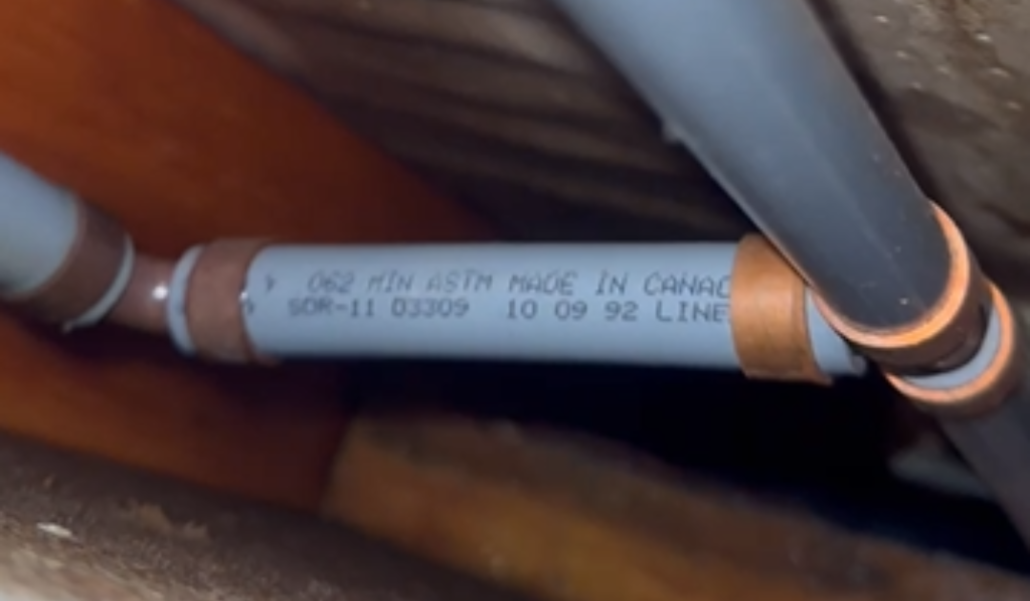
Many homes built throughout Vancouver Island during the 1980s and 1990s were plumbed with polybutylene, commonly called Poly-B. While these systems may still be functioning today, they are reaching an age where leaks, failures, and water damage can become a greater concern.
Homeowners in Nanaimo are particularly likely to encounter Poly-B plumbing. The city experienced significant residential growth during the late 1980s and throughout the 1990s, when Poly-B was a commonly used plumbing material.
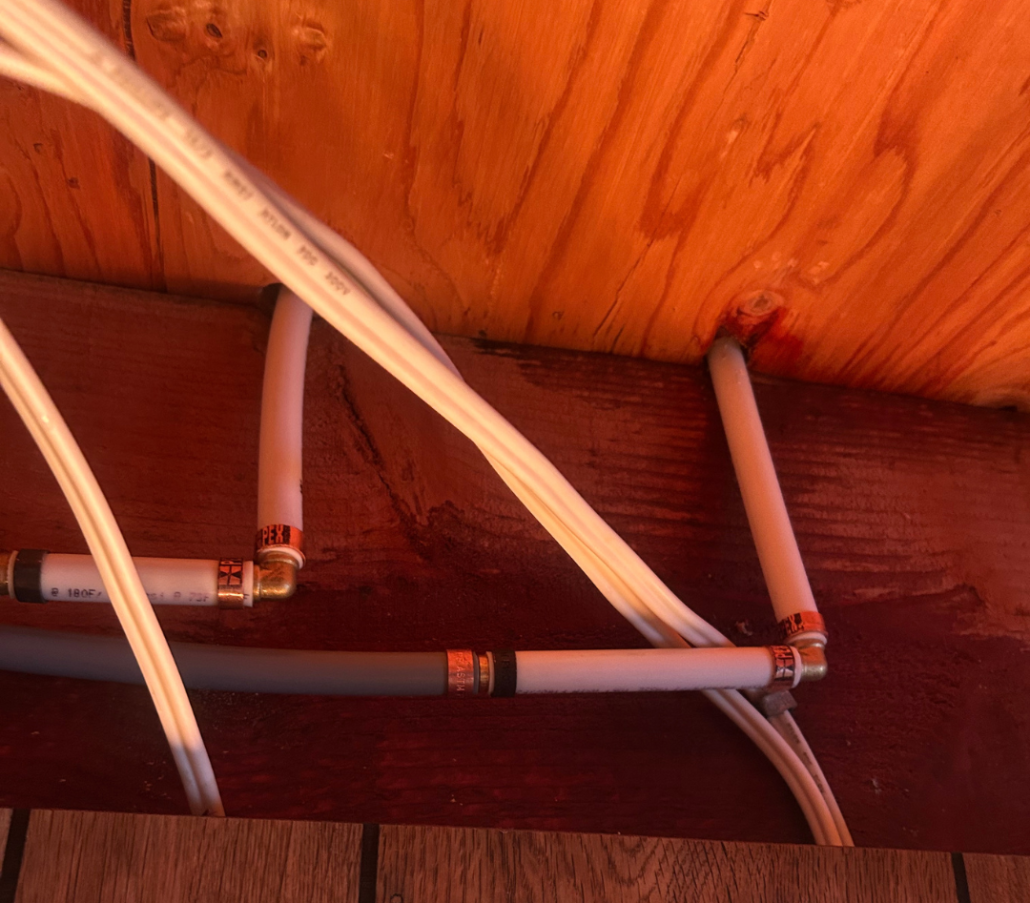
In this image, the grey pipe running horizontally along the bottom is existing Poly-B, while the white piping above it is PEX.
As a family-owned plumbing company, we’ve seen firsthand how common Poly-B piping is in neighbourhoods throughout Nanaimo and across Central Vancouver Island. Many homeowners don’t discover they have Poly-B until a home inspection, an insurance review, or an unexpected leak reveals it.
Poly-B is no longer approved for use in most modern plumbing applications because of its history of deterioration and higher failure rates over time. As plumbing codes and standards have evolved, materials such as PEX and copper have become the preferred options for new installations and replacements.
Replacing Poly-B plumbing can help:
- Reduce the risk of unexpected leaks and water damage.
- Upgrade aging water lines with modern plumbing materials.
- Improve confidence in the reliability of your plumbing system.
- Address concerns that may arise during a home sale or inspection.
- Address concerns or requirements raised by your home insurance provider.
For many homeowners, replacement is about dealing with aging plumbing before it becomes a larger problem.
What Happens During Poly-B Replacement?
No two homes are exactly alike, but Norm’s follows a thorough, planned process for whole-home Poly-B replacement. The exact approach will depend on your home’s layout, plumbing access, and existing system, but here is what homeowners can generally expect when working with our team.
Step 1: The Initial Assessment
Every Poly-B replacement begins with a thorough inspection.
During the assessment, we will identify the extent of the Poly-B piping, evaluate access points throughout the home, determine the best replacement routing, identify previous repairs or modifications, discuss replacement material options, and provide a detailed estimate and project timeline.
A rancher in Qualicum Beach may have different plumbing access challenges than a multi-storey home in Nanaimo or a split-level house in Ladysmith. This planning stage helps minimize disruption and ensures the project runs as smoothly as possible.
Step 2: Preparing Your Home
Before work begins, homeowners can take a few simple steps to help the project move efficiently.
This may include:
- Clearing access to plumbing fixtures.
- Removing items from beneath sinks.
- Moving furniture away from work areas.
- Providing access to utility rooms, crawlspaces, basements, or attics.
- Ensuring pets are safely secured.
We will explain exactly which areas of your home will require temporary access so you know what to expect before work begins.
Step 3: Water Shut-Off and System Draining
On installation day, your home’s water supply will need to be temporarily shut off while the replacement work is completed.
We will shut off the main water supply, drain the existing plumbing system, protect floors and work areas, and begin removing or disconnecting sections of Poly-B pipe.
Homeowners should expect temporary interruptions to water service during the project. Depending on the size and layout of your home, water may be restored in stages as work progresses.
Step 4: Installing New Water Lines
Once the old Poly-B piping has been disconnected, we install new plumbing lines.
Modern replacement materials typically include PEX, copper, or other approved plumbing materials. PEX is commonly used for Poly-B replacement because of its flexibility, durability, and efficiency during installation.
As part of our Poly-B replacement process, we also replace all individual fixture shut-off valves and supply lines to each fixture, helping ensure the entire water delivery system is new and fully functioning.
The replacement process may involve accessing plumbing through:
- Crawlspaces.
- Basements.
- Utility rooms.
- Cabinets.
- Ceiling cavities.
- Strategically placed openings in finished walls.
We work carefully to minimize drywall cuts and reduce disruption wherever possibl
Step 5: Testing the New Plumbing System
Before the project is considered complete, we thoroughly test the new plumbing system.
This typically includes:
- Pressure testing the new lines.
- Inspecting connections for leaks.
- Testing faucets, toilets, showers, and other fixtures.
- Verifying water flow.
- Checking hot and cold water service.
- Once the new piping has been installed and tested, we restore water service and check fixtures throughout the home to make sure everything is functioning properly.
We will also walk you through the completed work and answer any questions about the new system.
Frequently Asked Questions
How Long Does Poly-B Replacement Take?
Many smaller or straightforward Poly-B replacement projects can be completed in approximately one to three days. Larger or more complex homes may take several days, while projects requiring additional restoration work can take longer.
Several factors can affect the timeline, including:
- The size and number of storeys in the home.
- The number of bathrooms and plumbing fixtures.
- Plumbing accessibility.
- Pipe routing complexity.
- Previous renovations or plumbing modifications.
- Finishing or restoration requirements.
During the initial assessment, the team at Norm’s can provide a more accurate timeline based on your home’s specific plumbing and layout.
Will My Walls Need to Be Opened During Poly-B Replacement?
Usually, some access behind walls or ceilings is required, but often less than homeowners expect.
Plumbers can frequently reach water lines through crawlspaces, basements, utility rooms, cabinets, attics, and other existing access points. Where finished surfaces do need to be opened, careful planning can help keep those openings as limited and strategic as possible.
The goal is to create enough access to properly replace the Poly-B while minimizing disruption to the finished areas of your home.
Can I Stay in My Home During Poly-B Replacement?
In many cases, yes.
Most homeowners can remain in their homes while Poly-B is being replaced, although there will be periods without running water and technicians may need access to several areas of the house.
Your plumbing team should explain the expected water interruptions and work areas before the project begins so you can plan accordingly.
Who replaces Poly-B piping in Nanaimo, Parksville, Qualicum Beach, and Ladysmith?
Norm’s Plumbing, Heating and Air Conditioning provides Poly-B replacement throughout Nanaimo, Parksville, Qualicum Beach, Ladysmith, Lantzville, and surrounding Central Vancouver Island communities. The process begins with an assessment to determine how much Poly-B is present, how the existing plumbing can be accessed, and what will be involved in replacing it.
Is Poly-B plumbing a problem for home insurance?
Poly-B can be a concern for some home insurance providers due to the age and history of the material. Requirements vary by insurer and policy, so homeowners should speak directly with their insurance provider about their specific situation. If your insurer has raised concerns about Poly-B, Norm’s can assess the plumbing and provide an estimate for replacement.
Can Poly-B piping be replaced with PEX?
Yes. PEX is commonly used to replace Poly-B because it is flexible, durable, and well suited to many residential re-piping projects. Your plumber can recommend the appropriate replacement material based on your home and existing plumbing system.
Poly-B Plumbing Replacement in Nanaimo and Central Vancouver Island
Norm’s Plumbing, Heating and Air Conditioning provides Poly-B assessment and replacement for homeowners throughout Nanaimo, Parksville, Qualicum Beach, Ladysmith, and surrounding Vancouver Island communities.
As a third-generation family business, we’ve worked in homes throughout the region and understand both how common Poly-B is and what’s involved in replacing it with as little disruption as possible.
If you’re concerned about Poly-B in your home, contact Norm’s at 250-753-3641 or schedule an assessment to find out what replacement would involve for your home.